
Bongiovanni
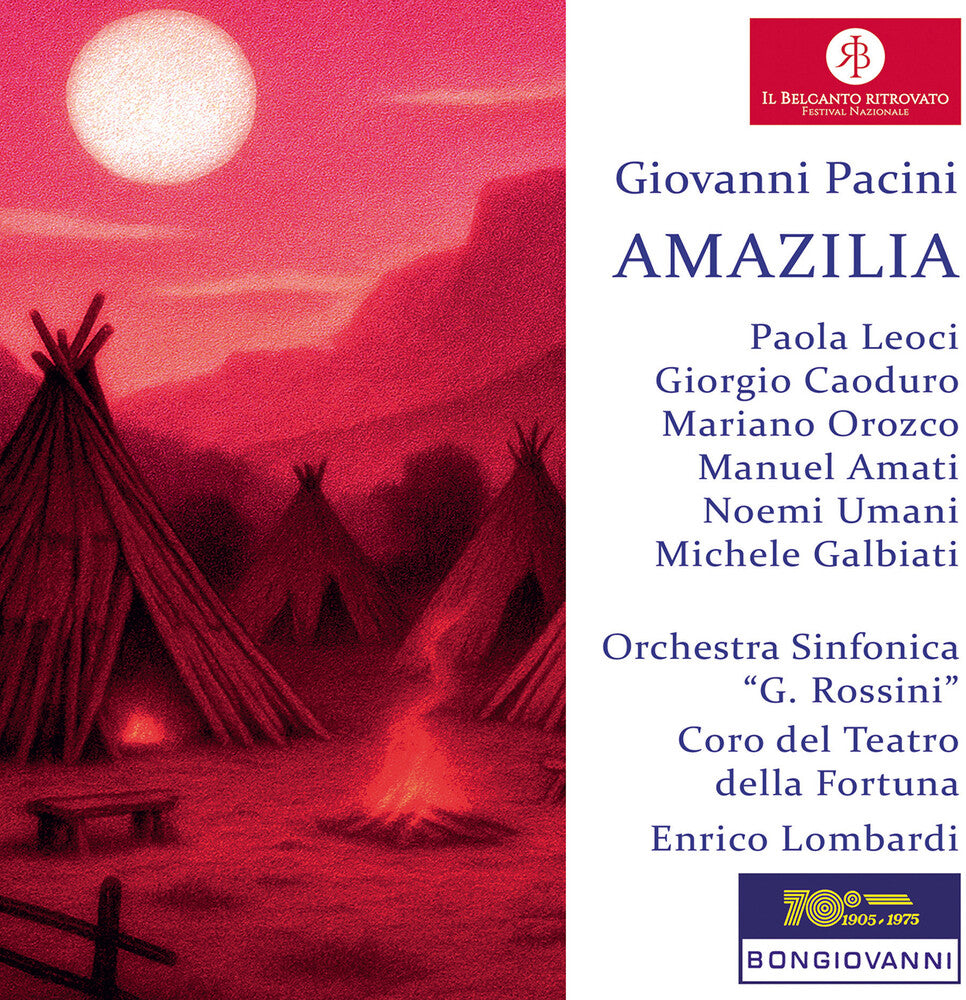
Pre-Order: Paola Leoci - Amazilia [CD]
Pre-Order: Paola Leoci - Amazilia [CD]
Couldn't load pickup availability
Written for the bass Luigi Lablache, the tenor Giovanni David and the soprano Josephine Fodor-Mainville, Amazilia premiered on 6 July 1825 at the Teatro San Carlo In Naples and was well received, although the local press reported a 'brilliant opening, which the rest of the performance did not quite live up to'. Restaged the following year at the San Carlo, Amazilia was definitively a 'highly praised score'. In the same year, outside the San Carlo, it was also performed in Palermo and Milan. Amazilia was subsequently performed in Rome, again in Naples and Palermo, in Messina and in Livorno, either in the one-act version or the two-act version, both of which were published in reductions for voice and piano in 1831. Amazilia remains an opera that Pacini must undeniably have considered significant: he even named one of his daughters Amazilia, and the opera enjoyed great popularity as a source of popular arias. Almost all the pieces can be found incorporated into operas by other composers, and Pacini himself consented to the grand rondo from Amazilia being sung within Gli Arabi nelle Gallie. This practice continued for a long time, ensuring the success of pieces from Amazilia well into the early 1850s, thanks in part to certain performers' fondness for specific arias from the opera. Zadir's cavatina, for example, became a signature piece for the tenor Mario de Candia, who incorporated it-adapted to his own needs-into operas such as Rossini's La donna del lago and Donizetti'sLucrezia Borgia. A few decades earlier, to give another example, Lablache introduced Cabana's cavatina into some performances of Rossini's Mose in Egitto in Paris. The French press still had Pacini's melodies ringing in their ears when, a few years later, they accused Bellini of plagiarism, claiming he had copied passages from Amazilia, which may well have had some influence on works such as Norma (1831). Even in the 20th century, Beverly Sills inserted the cabaletta 'Parmi vederlo ahi misero' into the 1974 New York production of Rossini's Assedio di Corinto, unaware of the aria's origin.
UPC: 8007068962228
Label: Bongiovanni
Release Date: 11.6.26
Format: CD
Share